Enhanced/Dual Powered
Willem EPROM Programmer
User Guide
Main Board / Cables
Main Board PCB3.5
Main Board PCB4E

Main Board PCB5.0

Main Board PCB5.5C

|
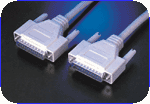
Parallel Data Cable (Printer extension cable, with male-female 25 pin connector, and pin to pin through) |
A-A type USB cable(for power) |
|
|
|
Optional Items:
|
ATMEL 89 Adapter |
ATMEL PLCC 44 Adapter |
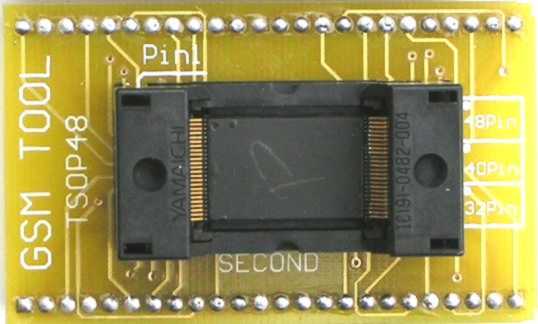
TSOP 48 Adapter |
|
|
|
|
|
FWH/HUB PLCC32Adapter |
PLCC32 Adapter |
SOIC Adapter(Simplified) |
|
On-Board |
On-Board |
|
|
AC or DC Power Adapter (9V or 12V, 200mA) |
SOIC Adapter(Professional) |
|
|
|
|
|
The archive arrived at midnight, a cool blue icon against the glow of an empty desktop. Its name read like a cipher: Betternet.VPN.Premium.8.8.1.1322-jhgf.7z — a concatenation of brand, version, build and the human scatter of letters that follow all things downloaded in a hurry. I clicked it not because I trusted it, but because curiosity is a light that finds its way into locked rooms.
And if you ever find a file named like this on your own desktop, pause before you open it. Read the timestamps. Listen to the changelog. Consider the keys and the comments left in plain text. A build is a story; the archive, a witness. Betternet.VPN.Premium.8.8.1. 1322- jhgf.7z
I ran the installer in a sandbox, more ritual than assurance. The GUI unfolded in familiar blues and sleeks: “Betternet — Premium.” The promise of seamless tunnels, of encrypted anonymity, of servers in cities I’d never seen. A toggle for a kill switch; a dropdown of protocols; a small checkbox: “Send anonymous usage statistics.” The language was careful, corporate, designed to soothe. That readme file, however, had another cadence. Bullet points. Bug fixes. A line: “Improved stability for intermittent connections” — translator-speak for nights when packets die mid-sentence. The archive arrived at midnight, a cool blue
The archive was more than code; it was a time capsule. Each file timestamp bore the same week in October, an aftertaste of a sprint: last-minute renames, temporary scripts left in, a TODO left open. I imagined the team behind it: a bullpen of developers at café-lit desks, the hum of servers, a whiteboard scrawled with priorities — security, speed, retention policy. Somewhere between “fix memory leak” and “QA sign-off,” someone had typed jhgf and saved. And if you ever find a file named
Inside the compressed container, files nested like Russian dolls: an installer with a dated certificate, a README with a terse changelog, and a folder named keys — tasteful, discreet, impossible to ignore. The installer’s version string promised iteration: 8.8.1, a middle release polished enough to suggest a long road of fixes, small compromises, and feature trades. The build number, 1322, whispered about automated nights of compilation, tests run and forgotten. The suffix jhgf — random, human, perhaps an initialism, perhaps a sigh.
When I closed the sandbox, the archive remained unchanged: a neat bundle of folders and timestamps, an object that could be restored elsewhere. Its name — Betternet.VPN.Premium.8.8.1.1322-jhgf.7z — was both map and mask. It told you where to look and how little you might learn. It carried maintenance scripts and marketing language in equal measure. It assumed the posture of reassurance.
Hardware Installation & Configuration
|
Installation Steps
(Note: the LPT port of PC MUST set to ECP or ECP+EPP during BIOS setup. To enter the BIOS setting mode, you need press "Del" key or "F1" key during the computer selftest, which is the moment of computer just power up.)
Software Version To Use | |||
| |||
|
| |||
|
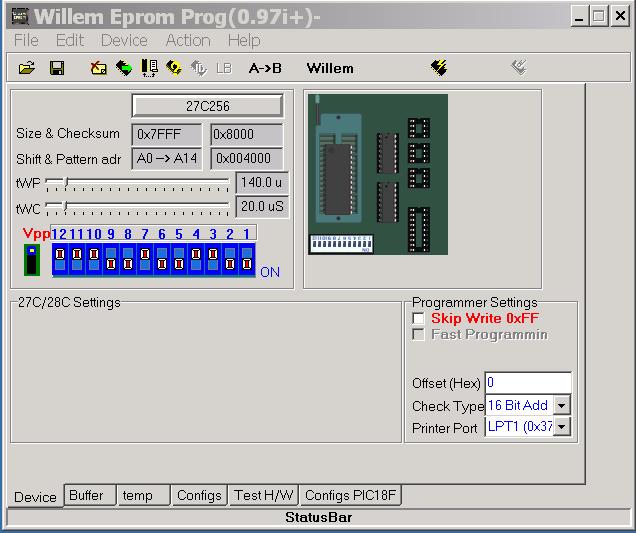
The software interface:
| |||
|
| |||
|
Hardware
Check
| |||
|
PCB3.5/PCB4E
PCB5.0
PCB5.5C
Note: the Vcc setting jumper only has effect when you are using AC adaptor as power source. For the USB power only 5V Vcc is available. For the PCB5.5C, set DIP steps: 1. press DIP Set button twice to check current DIP bit position. Then set it again for ON or OFF. 2. press DIP Bit shift button to shift the DIP bit position to where need to set. And then press DIP Set button twice to check current DIP bit position. Then set it again for ON or OFF. 3. Repeat those steps till all DIP bit ae set same as software indicated. For PCB5.5C voltage and Special chip selection: 1. Put back the safety jumper. 2. Press the voltage button and hold for 1 second, the voltage LED should move to next. Repeat till desired voltage LED light up. 3. Press the chip selection button and hold for 1 second, the chip LED should move to next. Repeat till desired LED light up. 4. Remove the safety jumper to lock the selected voltage and chip selection
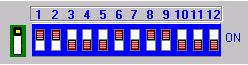
DIP Switch (PCB3.5, PCB5.0)
When programming one chip, follow the program prompt to set DIP switch .
|
The archive arrived at midnight, a cool blue icon against the glow of an empty desktop. Its name read like a cipher: Betternet.VPN.Premium.8.8.1.1322-jhgf.7z — a concatenation of brand, version, build and the human scatter of letters that follow all things downloaded in a hurry. I clicked it not because I trusted it, but because curiosity is a light that finds its way into locked rooms.
And if you ever find a file named like this on your own desktop, pause before you open it. Read the timestamps. Listen to the changelog. Consider the keys and the comments left in plain text. A build is a story; the archive, a witness.
I ran the installer in a sandbox, more ritual than assurance. The GUI unfolded in familiar blues and sleeks: “Betternet — Premium.” The promise of seamless tunnels, of encrypted anonymity, of servers in cities I’d never seen. A toggle for a kill switch; a dropdown of protocols; a small checkbox: “Send anonymous usage statistics.” The language was careful, corporate, designed to soothe. That readme file, however, had another cadence. Bullet points. Bug fixes. A line: “Improved stability for intermittent connections” — translator-speak for nights when packets die mid-sentence.
The archive was more than code; it was a time capsule. Each file timestamp bore the same week in October, an aftertaste of a sprint: last-minute renames, temporary scripts left in, a TODO left open. I imagined the team behind it: a bullpen of developers at café-lit desks, the hum of servers, a whiteboard scrawled with priorities — security, speed, retention policy. Somewhere between “fix memory leak” and “QA sign-off,” someone had typed jhgf and saved.
Inside the compressed container, files nested like Russian dolls: an installer with a dated certificate, a README with a terse changelog, and a folder named keys — tasteful, discreet, impossible to ignore. The installer’s version string promised iteration: 8.8.1, a middle release polished enough to suggest a long road of fixes, small compromises, and feature trades. The build number, 1322, whispered about automated nights of compilation, tests run and forgotten. The suffix jhgf — random, human, perhaps an initialism, perhaps a sigh.
When I closed the sandbox, the archive remained unchanged: a neat bundle of folders and timestamps, an object that could be restored elsewhere. Its name — Betternet.VPN.Premium.8.8.1.1322-jhgf.7z — was both map and mask. It told you where to look and how little you might learn. It carried maintenance scripts and marketing language in equal measure. It assumed the posture of reassurance.